Temples & Culture
Temple Etiquette & Dress Code in Chiang Mai
How to behave and dress respectfully at Chiang Mai's temples — dress rules, do's and don'ts, photography, footwear and common mistakes.
5 min read
Less to worry about than you think
Most visitors approach temple etiquette anxiously and get it broadly right anyway. Thai temples are working religious sites and also public spaces, and the people who run them are entirely used to foreign visitors.
The rules that actually matter are few. Learn these and you’ll be welcome anywhere. This guide sits under our temples and culture hub.
Dress
The rule: shoulders and knees covered. Applies to everyone.
What works:
- Long trousers, or a skirt or dress below the knee
- A t-shirt or shirt with sleeves
- Loose fabrics, because you’ll be walking in heat
What doesn’t:
- Vests, tank tops, strappy tops
- Shorts of any length
- Very short or sheer skirts
- Anything with slogans that might read as disrespectful
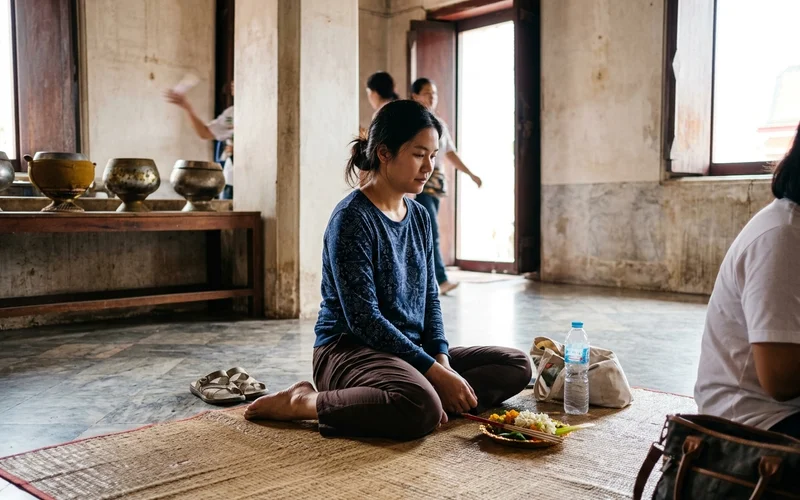
If you arrive unprepared: the major temples usually have sarongs and cover-ups available to borrow or rent for a small deposit. It works, but it’s warmer and less comfortable than dressing correctly to begin with.
A practical tip for Chiang Mai: carry a light scarf or sarong in your bag. It weighs nothing, covers shoulders instantly, and saves the day when you pass a temple you hadn’t planned to enter.
Shoes
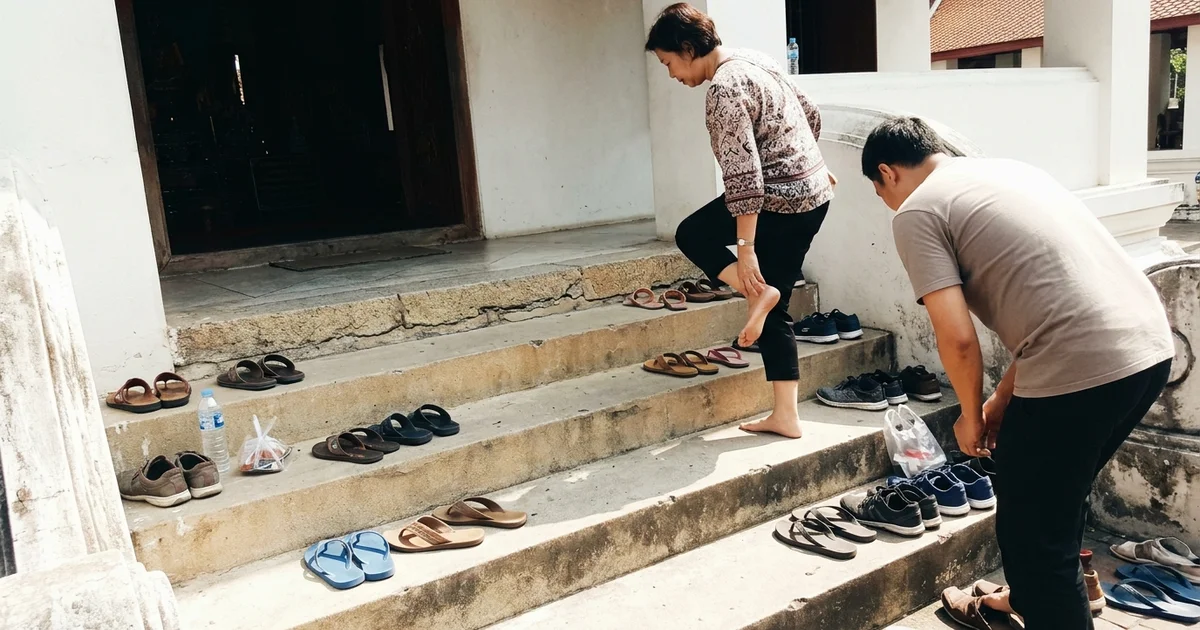
Off before entering any building. Not just the main hall — any structure you step inside.
You’ll see shoes lined up outside the entrance. Add yours to the row. Nobody takes them, and nothing bad happens.
Wear slip-ons. Laced boots at a five-temple morning is a self-inflicted problem.
Inside the building
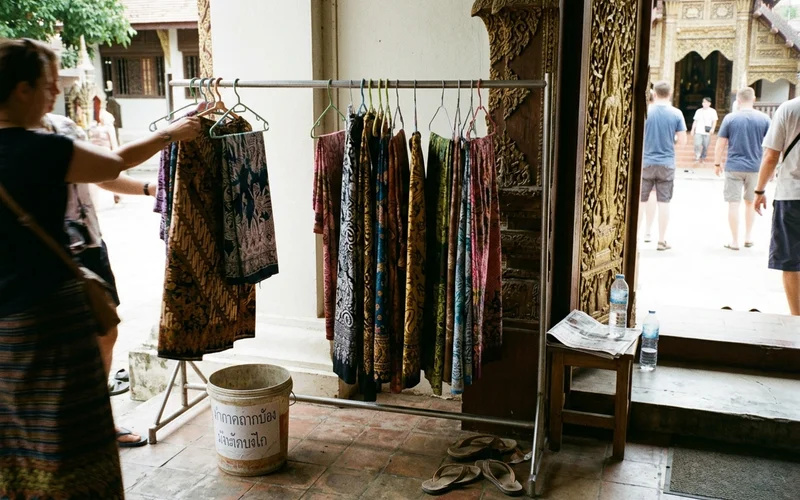
Feet. The single most important rule. Never point your feet toward a Buddha image or a monk. When sitting on the floor, tuck your feet behind you to one side — the position Thais use, sometimes called the mermaid sit. Cross-legged with soles exposed toward the altar is the mistake to avoid.
Head. Don’t stand or sit higher than a Buddha image where you can avoid it. Lower your head slightly when passing in front of people who are praying.
Voice. Quiet. Phones on silent.
Monks. Women should not touch a monk or hand something directly to him — place the item down, or hand it to a male intermediary. This isn’t a judgement about women; it’s a rule monks observe about themselves.
Movement. Walk clockwise around a chedi or Buddha image, which is the traditional direction of circumambulation.
Pointing. Don’t point at Buddha images with a finger. Gesture with an open hand if you need to indicate something.
Photography
| Situation | Guidance |
|---|---|
| Temple buildings and grounds | Fine |
| Buddha images | Generally fine; no flash inside |
| Posing in front of a Buddha image | Don’t. Especially not with your back to it |
| Monks at a distance | Generally fine |
| Monks close up | Ask first |
| People praying | Ask, or don’t |
| Ceremonies | Observe quietly rather than documenting |
The underlying principle: this is a place of worship where people are having genuine religious experiences. Photograph the architecture freely and the people carefully.
Making an offering
If you’d like to participate rather than observe, it’s welcomed:
- Buy a small offering set — usually lotus buds, incense and a candle — from a stall at the temple.
- Light the candle and incense from the communal flame.
- Kneel or stand before the Buddha image, raise the offering to your forehead, and place it in the stand.
- Three incense sticks is conventional.
Nobody will correct you if you get the order slightly wrong. The gesture is what counts.
For Doi Suthep specifically
The mountain temple sees the highest visitor volume and enforces dress most consistently. Arrive covered — see our Doi Suthep visitor guide for the practicalities of the trip itself.