Temples & Culture
Wat Phra That Doi Suthep Visitor Guide
A practical visitor guide to Wat Phra That Doi Suthep — how to get there, fees, dress code, the best time to visit and what to see.
6 min read
The one temple to see
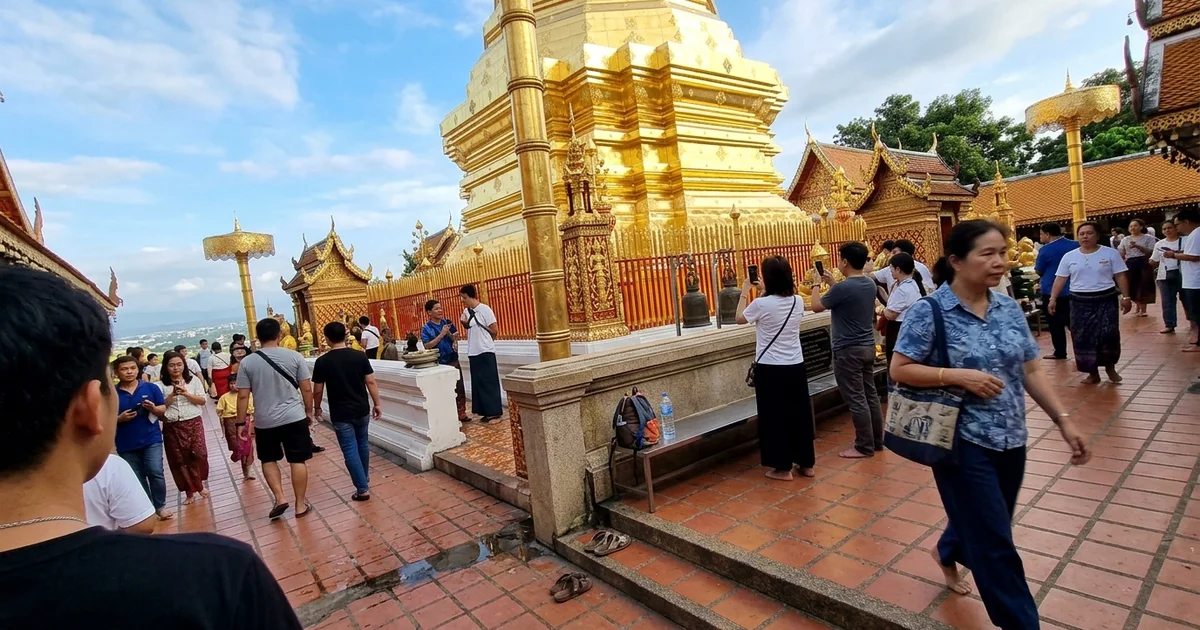
Wat Phra That Doi Suthep sits on the mountain above Chiang Mai at around 1,050 metres, and it’s the most significant religious site in northern Thailand. Founded in the fourteenth century, according to legend on a spot chosen by a white elephant carrying a relic.
It’s also the single most visited place in the region, which shapes the whole experience. Getting the timing right is the difference between a genuinely moving morning and shuffling behind three coach parties. This guide sits under our temples and culture hub.
Getting there
| Method | Roughly | Notes |
|---|---|---|
| Songthaew | Cheapest per person | From Chang Phueak Gate or near Maya; leaves when full |
| Grab / Bolt | Mid | Leaves immediately, agree the return separately |
| Rented scooter | Cheapest overall | Steep, winding road — confident riders only |
| Private car or tour | Highest | Comfortable, combines with Doi Pui and the Hmong village |
The road up is about 15km from the city with continuous switchbacks. It’s a pleasant ride on a capable machine and genuinely unsafe on an underpowered scooter with two passengers and poor brakes.
If you take a songthaew, agree the return arrangement before you go up. Getting down without a plan on a quiet afternoon is possible but tedious.
When to go
Early morning, before 9am. This is the whole answer. You get:
- Almost no crowds
- Cool air on the terrace
- The best chance of a clear valley view
- Monks going about actual temple business rather than performing for visitors
Avoid mid-morning to early afternoon, when tour groups arrive in volume, and weekends and Thai public holidays, when domestic visitors add to the numbers.
Season matters. Cool season mornings from November to February give the clearest views. During burning season, the valley view is often reduced to grey haze — check our air quality guidance before planning around the view.
What you’ll see
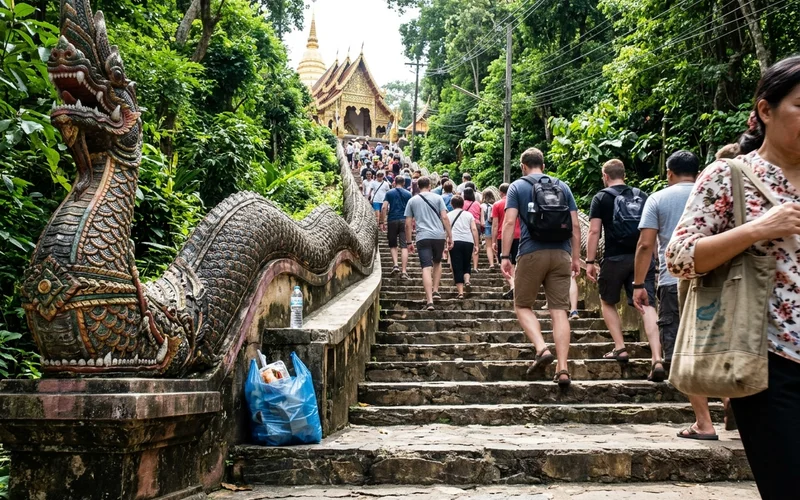
The naga staircase. 306 steps flanked by two enormous serpent balustrades running the full length. The classic approach, and worth doing on foot if you’re able. A funicular railway runs alongside for a small fee.
The upper terrace. Where the temple proper sits, and where shoes come off.
The golden chedi. The centrepiece — a gilded stupa said to house a relic of the Buddha, surrounded by a walkway where visitors circumambulate clockwise three times.
The viharn and murals. Buildings around the terrace with Buddha images and painted narratives of the temple’s founding.
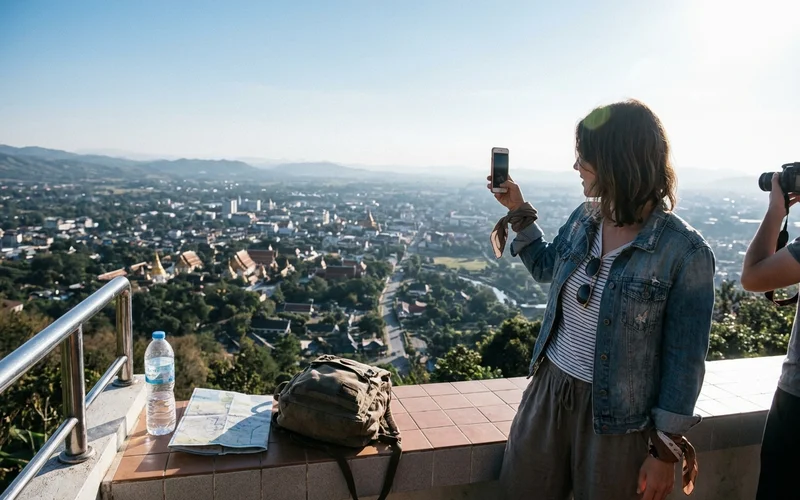
The viewpoint. Looking east over the whole Chiang Mai valley, with the airport and the city grid laid out below.
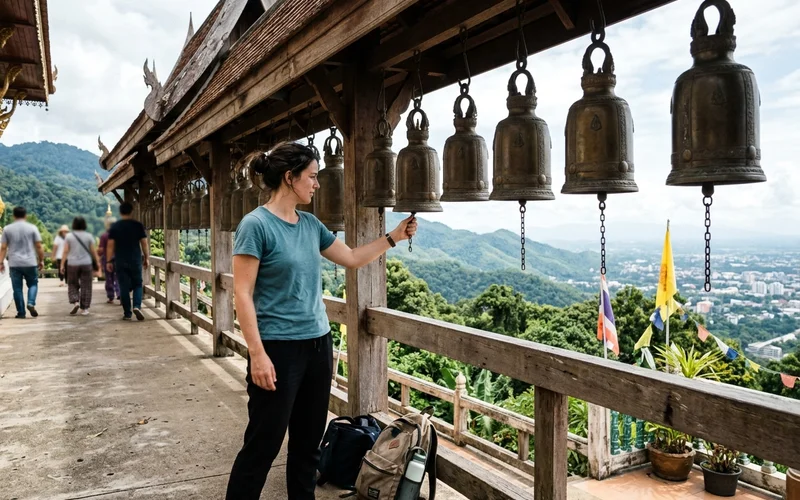
The bells. A row along one edge, rung in sequence by passing visitors.
Practicalities
- Fees: small entrance charge for foreign visitors, plus optional funicular fare. Cash.
- Time needed: an hour at the temple is enough; two if you want to sit with it.
- Dress: shoulders and knees covered. Shoes off on the terrace. See our temple etiquette guide.
- Facilities: toilets, food and drink stalls at the base, a few shops.
- Weather: noticeably cooler than the city, and genuinely cold on a cool-season morning. Bring a layer.
Combining the trip
Two easy additions on the same road:
Doi Pui Hmong village, further up the mountain, with gardens, viewpoints and a market. Touristed but pleasant.
Wat Pha Lat, roughly halfway up — a small forest temple beside a stream, almost empty, and for many residents the more atmospheric of the two. Reachable by road or via the Monk’s Trail walking path from the base of the mountain.
If you only have a morning and want the version without crowds, Wat Pha Lat plus an early Doi Suthep is the best combination the mountain offers.