Temples & Culture
A Self-Guided Old City Temples Walking Route
A self-guided walking route through Chiang Mai's key Old City temples — the order to visit (Chedi Luang, Phra Singh and more), timing and map notes.
5 min read
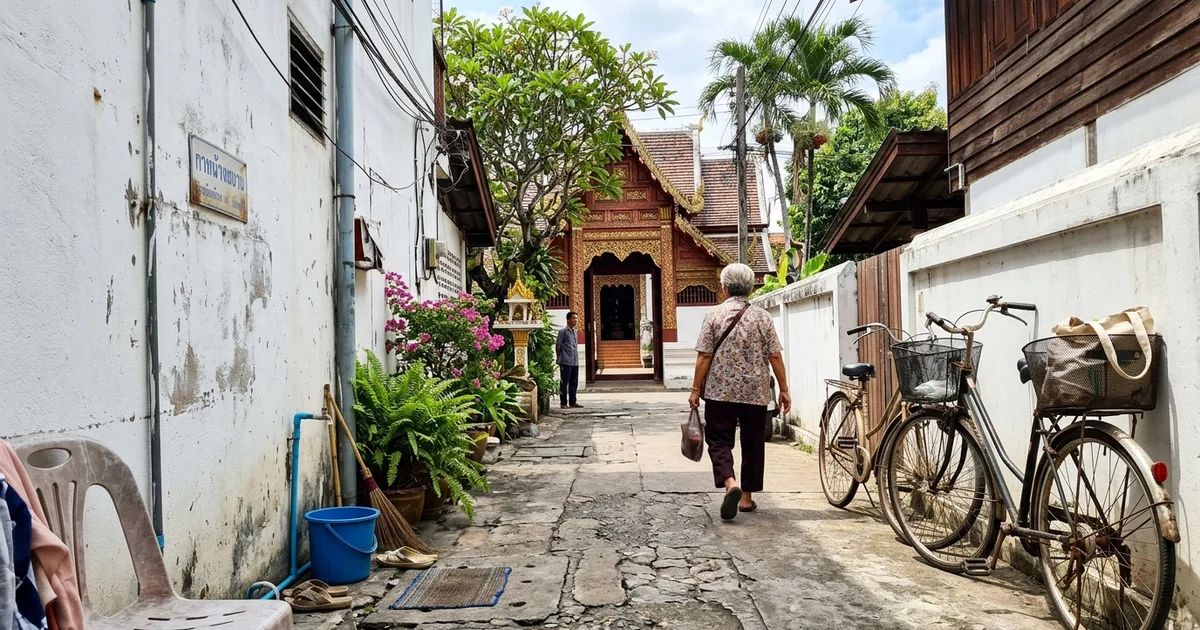
The route in short
Five temples, roughly three kilometres of walking, three to four hours at a relaxed pace. Start early — by 8am if you can — because the Old City is pleasant in the morning and punishing by midday.
The order below runs west to east, which puts the two most impressive sites early while you’re fresh and ends near coffee. This guide sits under our temples and culture hub.
The route
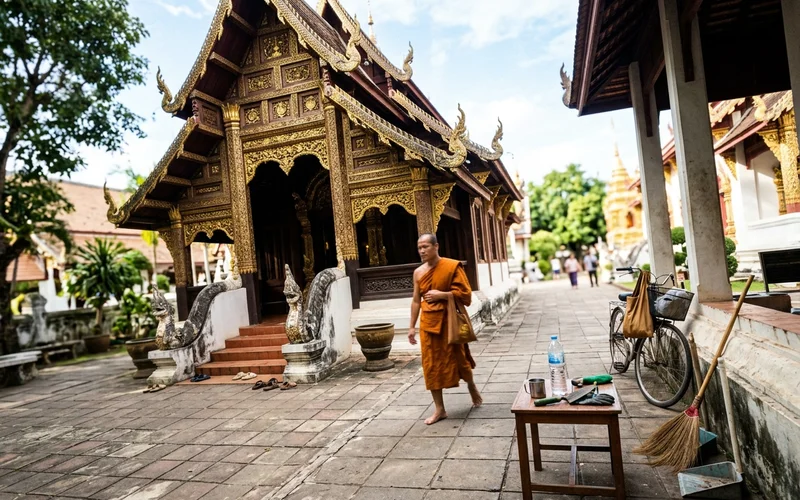
1. Wat Phra Singh — start here
The Old City’s most important working temple, at the western end of Ratchadamnoen. The Wihan Lai Kham is the highlight: a small wooden building with gilded stucco, painted murals of northern life, and some of the finest Lanna craftsmanship in Thailand.
Give it thirty minutes. Look at the murals properly — they document nineteenth-century northern Thai daily life in remarkable detail.
Walk east along Ratchadamnoen, about 700 metres.
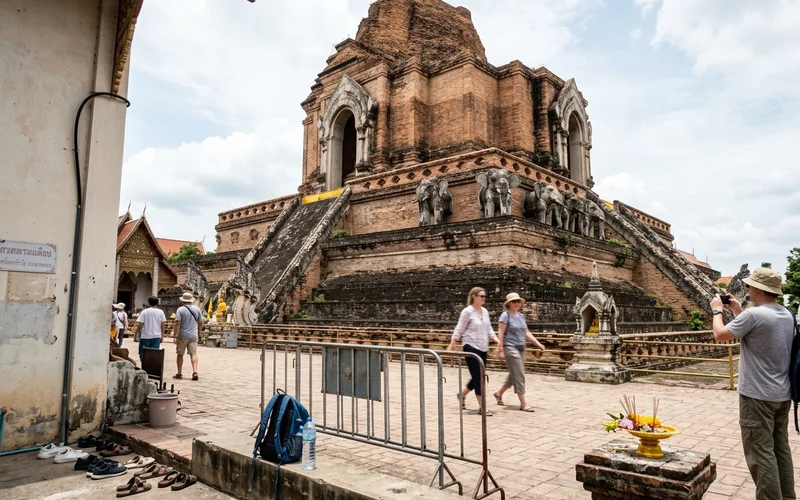
2. Wat Chedi Luang — the centrepiece
The ruined chedi here was the tallest structure in the Lanna kingdom before an earthquake took its upper section in the sixteenth century. What remains is still enormous, with elephant figures at the base and a scale that photographs never quite convey.
The site also holds the city pillar shrine and a “monk chat” programme where visitors can talk with novice monks practising their English.
Allow forty-five minutes. This is the one to sit with.
Head north-east through the lanes, about 600 metres.
3. Wat Chiang Man — the oldest
The city’s first temple, founded when Chiang Mai itself was established in 1296. Smaller and much quieter than the first two, with an elephant-buttressed chedi and two revered small Buddha images.
Twenty minutes. The quiet is part of the appeal.
Walk south-west, about 500 metres.
4. Wat Phan Tao — the teak one
Immediately beside Wat Chedi Luang and constantly overlooked. A dark teak viharn built from dismantled royal residence panels, with an atmosphere entirely different from the whitewashed and gilded temples around it.
Fifteen minutes, and one of the more memorable stops.
Wander south through the lanes toward the moat.
5. Wat Sri Suphan — the silver temple
Just outside the southern moat on Wualai Road, so technically off-piste, but worth the extra ten minutes. The ordination hall is clad entirely in embossed silver and aluminium, made by the silversmiths of the surrounding neighbourhood.
Note: the ordination hall itself is open to men only, a traditional restriction. The exterior and grounds are open to everyone.
Practical notes
| Detail | Guidance |
|---|---|
| Start time | 8am, ideally |
| Total distance | ~3km, flat |
| Time needed | 3–4 hours relaxed |
| Fees | 20–50 THB at the major sites; cash, small notes |
| Dress | Shoulders and knees covered throughout |
| Shoes | Off before entering any building — wear slip-ons |
| Water | Carry some; shops are frequent but the heat is real |
Making it better
Break for coffee halfway. There are good cafés in the lanes between Chedi Luang and Chiang Man. Forty minutes of shade and air conditioning transforms the second half.
Sit down at each temple. Five minutes on a bench watching what actually happens in a working temple is worth more than photographing every building.
Read the etiquette guide first. Our temple etiquette and dress code guide covers the small courtesies that make visiting comfortable.
Don’t do all five if you’re tired. Two temples done properly beats five done at pace. Wat Phra Singh and Wat Chedi Luang are the essentials; everything else is a bonus.
If you’re basing yourself inside the moat, our Old City guide covers the neighbourhood these temples sit in.