Restaurants & Thai Food
Where to Eat the Best Khao Soi in Chiang Mai
The best Khao Soi spots in Chiang Mai by area, with prices and what makes a great bowl — from famous names to local favourites.
5 min read
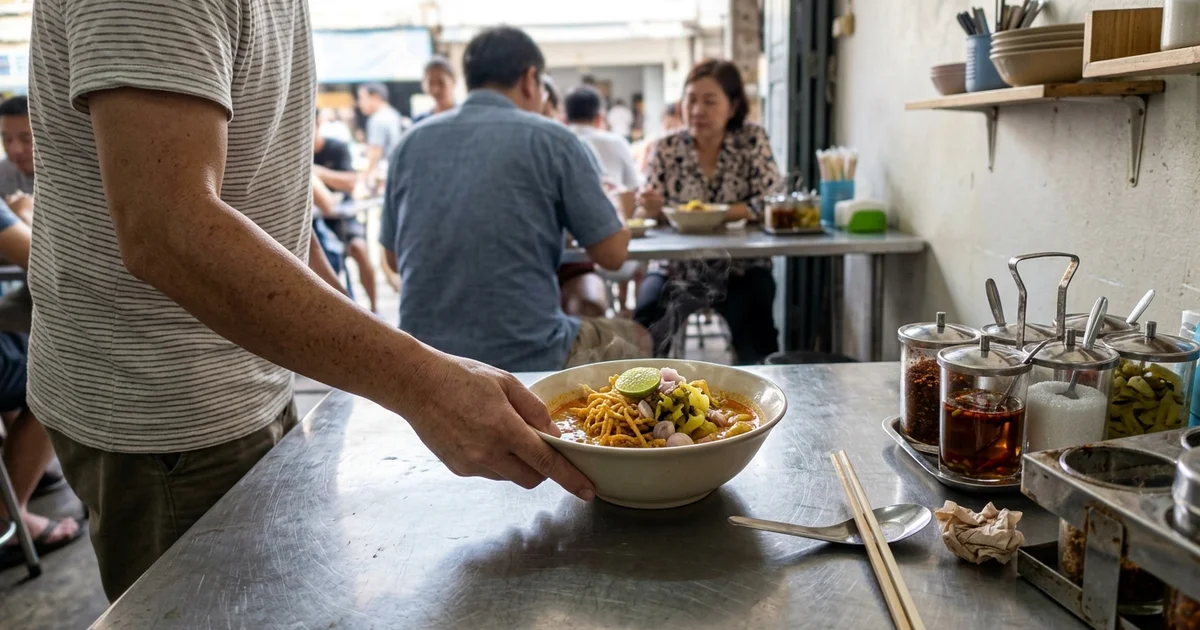
What makes a good bowl
Before the where, the what. A good khao soi has:
A broth with depth. Coconut milk carries the curry paste rather than smothering it. You should taste turmeric, coriander seed, cardamom and a little heat underneath the richness.
Soft noodles that hold. Boiled to order, not sitting in the pot. They should still have bite.
Crisp topping noodles. Fried fresh enough to still be crunchy when the bowl reaches you. Soggy topping means the batch has been sitting.
Meat that gives. A chicken drumstick should come off the bone without work. Beef should be tender enough to break with a spoon.
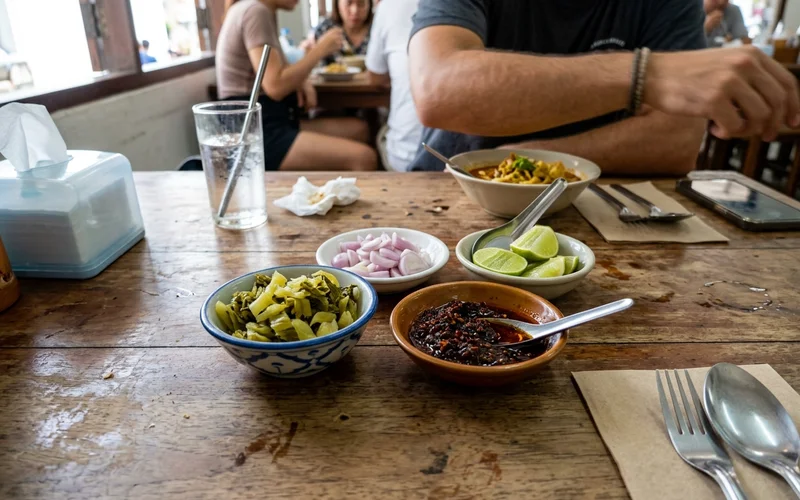
The full condiment set. Pickled mustard greens, raw shallot, lime, and chilli paste in oil. If a shop doesn’t put these on the table, that tells you something.
This guide sits under our restaurants hub; for the cuisine it belongs to, see Lanna food explained.
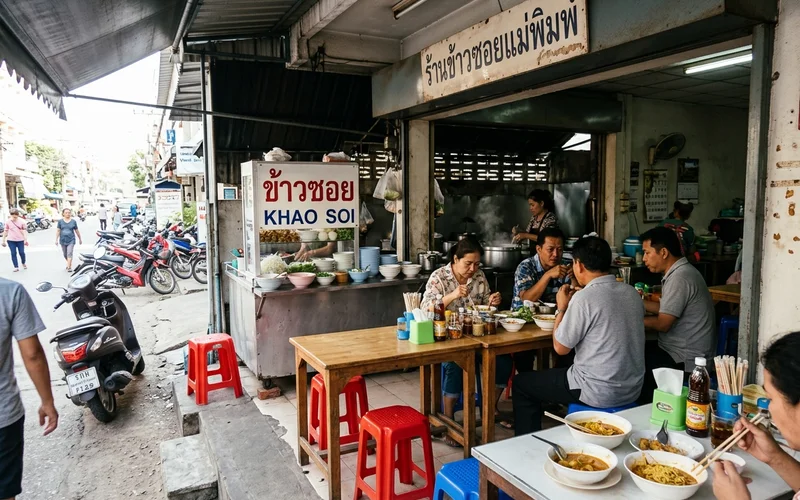
Where to look, by area
The Islamic quarter, near Charoenprathet and the Ban Haw Mosque. This is khao soi’s historic heartland in Chiang Mai, reflecting the dish’s Chinese Muslim origins. Several long-established shops here have national reputations, and the queues at lunchtime are real. Go before noon or after 1pm.
Around the Old City. Shops here range from excellent local operations to tourist-facing restaurants charging triple. Look for Thai customers and plastic furniture.
Santitham and Chang Phueak. Neighbourhood shops serving residents, cheaper and often just as good. These are where locals actually eat khao soi on a Tuesday.
Nimman. Convenient, more expensive, generally good but rarely the best in the city. Fine if you’re already there.
Warorot Market area. Market stalls and small shops nearby, good value and busy with people who know what they’re doing.
Practical notes
| Detail | What to expect |
|---|---|
| Price | 50–70 THB local, 90–150 THB tourist-facing |
| Hours | Many shops are lunch-only and sell out by 2pm |
| Best time | 11am–1pm, when the broth is fresh and turnover is highest |
| Portion | Modest. Ordering two is normal and not embarrassing |
| Vegetarian | Available at some places; ask, as most broths use chicken stock |
The sell-out rule matters. Dedicated khao soi shops make a batch and close when it’s gone. Arriving at 3pm expecting the famous bowl is the most common khao soi disappointment in Chiang Mai.
How to eat it
- Squeeze the lime in first. All of it.
- Add the pickled greens. They’re not a side; they belong in the bowl.
- Raw shallot for sharpness, as much as you like.
- Chilli paste last, in small amounts, tasting as you go.
- Break the crispy noodles into the broth as you eat, rather than all at once, so some stay crunchy.
The honest verdict
Chiang Mai’s khao soi ranking arguments are enjoyable and largely unresolvable. The famous shops are genuinely very good and worth visiting once. The neighbourhood shop nearest you is probably a 9 out of 10 and costs 55 THB.
Eat at both. Then find your own local, and go on Tuesdays.