Restaurants & Thai Food
Chiang Mai's Best Street Food & Markets to Eat At
A guide to street-food eating in Chiang Mai by market and area — the key markets, must-try dishes, and tips on hygiene, ordering and timing.
6 min read
Where the good eating actually is
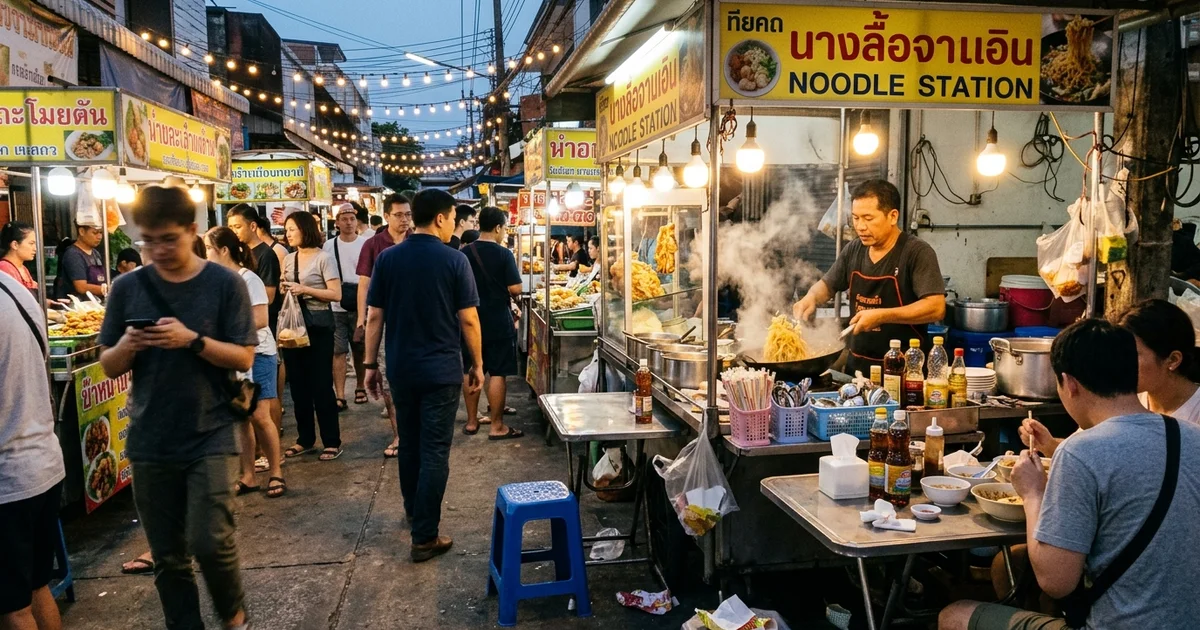
The best food in Chiang Mai is not in restaurants. It’s at stalls, in markets, and in one-dish shops with plastic stools and no menu in English.
That’s not romanticism about street food; it’s an observation about how the city’s food economy works. Rent-free stalls specialising in a single dish for twenty years produce better food than a restaurant covering forty dishes. This guide sits under our restaurants hub.
The main markets for eating
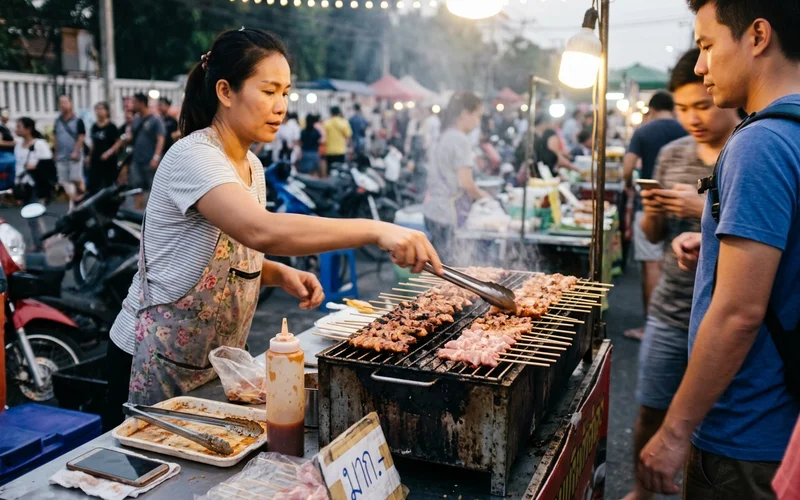
Chang Phueak Gate night market. Just north of the Old City’s northern gate. Grilled meats, noodles, and the celebrated khao kha moo stall serving braised pork leg over rice late into the night. Compact, busy, mostly locals. Evenings.
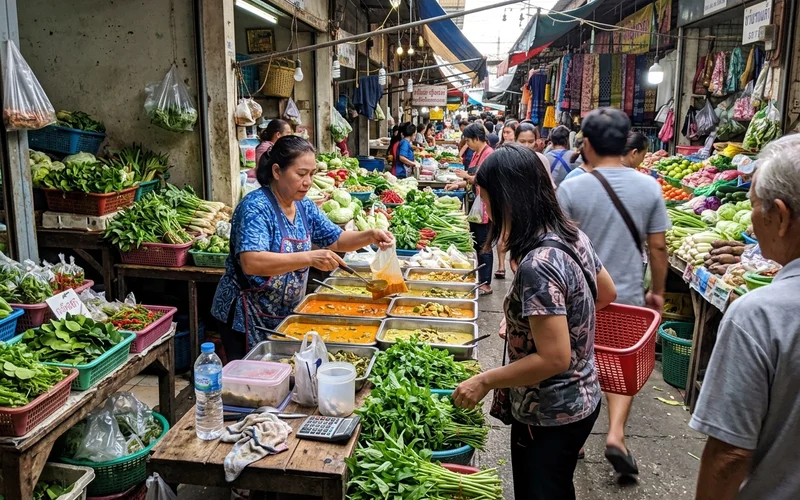
Warorot Market (Kad Luang). The city’s historic fresh market near the river. Daytime, and the best place for northern specialities — sai oua sausage, nam prik, sticky rice, curries by weight. Go in the morning. Those northern dishes are worth knowing properly before you order — see northern Thai (Lanna) food explained.
Sunday Walking Street. Ratchadamnoen closes from late afternoon. The temple courtyards along it become food courts, which is where the good eating is — not the stalls on the street itself. Sundays only.
Saturday Walking Street. Wualai Road, the night before. Smaller, less overwhelming, similar temple-courtyard food courts.
Ton Payom Market. Near the university. Everyday food, prepared dishes to take away, student prices. Underrated.
Somphet Market. Small, north-east Old City, good for prepared food and fruit.
What to eat
| Dish | What it is | Roughly |
|---|---|---|
| Khao kha moo | Braised pork leg over rice with egg and greens | 50–60 THB |
| Sai oua | Grilled northern herb sausage, sold by weight | 20–40 THB/portion |
| Moo ping | Grilled pork skewers, eaten with sticky rice | 10–15 THB each |
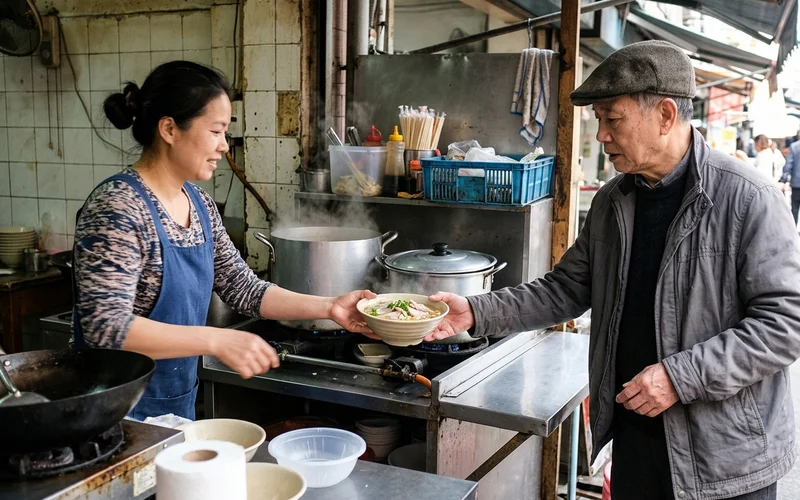
| Khanom jeen nam ngiao | Fermented noodles in tomato pork broth | 40–50 THB |
| Kai yang and som tam | Grilled chicken and papaya salad | 60–100 THB |
| Roti | Griddled flatbread, sweet or savoury | 30–50 THB |
| Khao niao mamuang | Mango sticky rice, seasonal | 60–80 THB |
Prices are for local markets. Tourist-facing walking street stalls charge more.
The practical rules
- Follow the queue. A line of Thai customers is the only review you need.
- Watch the cooking. Food cooked to order beats food sitting in a tray.
- Go at peak times. Counterintuitive but correct: high turnover means fresh ingredients.
- Bring cash, small notes. Many stalls take QR payment now, but not all.
- Point and smile. No shared language required. Hold up fingers for quantity.
- Eat where there’s seating if you’d rather not stand — many stalls have a few tables behind them.
Timing
Morning (6–10am). Fresh markets. Warorot, Somphet, neighbourhood morning markets. Best selection of prepared northern food.
Lunch (11am–2pm). One-dish shops. Khao soi sells out; noodle shops are at their best.
Late afternoon (4–7pm). Evening markets set up. Grilled food starts.
Evening (6–10pm). Chang Phueak, night markets, the walking streets at weekends.
Late (after 10pm). Options thin out considerably. Chang Phueak’s famous stall is one of the reliable late options.
A note on hygiene
Chiang Mai’s street food is, in practice, low risk. Ice is factory-produced and safe. Cooked-to-order food at busy stalls is fine. The genuine risks are pre-prepared food sitting warm for hours and raw items at very quiet stalls.
Apply the turnover rule and you’ll be fine — and you’ll eat considerably better than anyone playing it safe in air-conditioned restaurants.
For the market shopping side rather than the eating side, see our night markets and walking streets guide.